Offline-First Cross-Plattform App for poultry evaluations in Germany
Paper to Digital Workflow
Replaced printed evaluation sheets with a custom mobile app- increasing operational efficiency
Offline-First Architecture
Full functionality without internet on rural farm locations - data syncs automatically via Laravel API once connectivity is restored
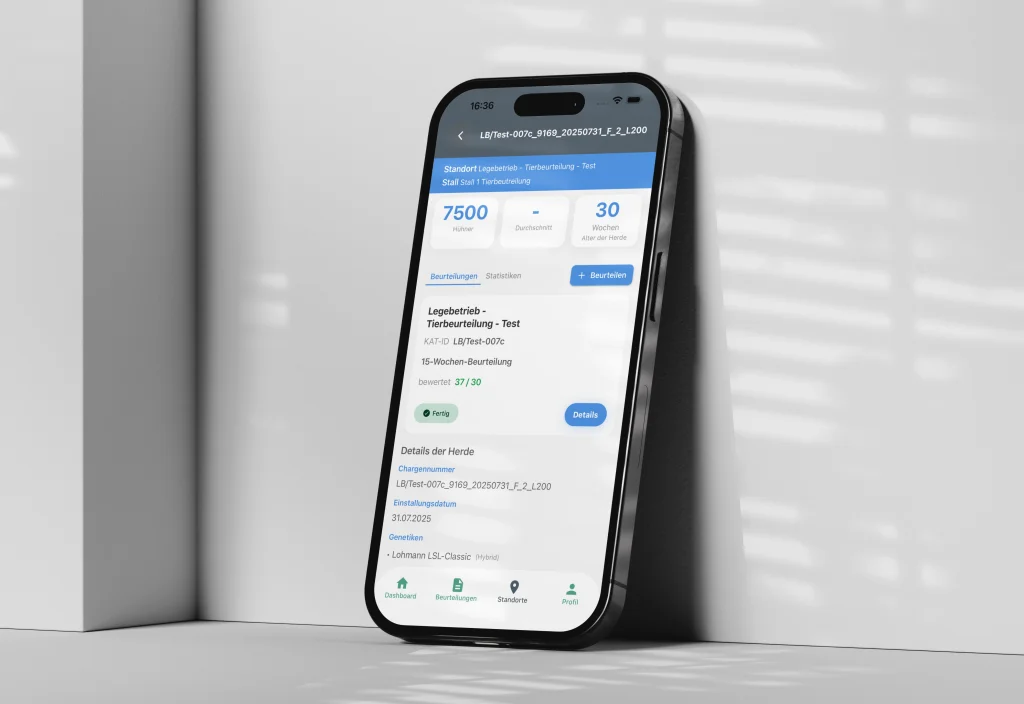
Our assignment to Laramate was to develop a mobile app for the digital recording of animal welfare assessments of laying hens in poultry houses. The focus was on a simple and clearly structured user experience to keep the barrier to entry low and ensure that all KAT participants could easily adopt the app.
Through close and trusting collaboration, our requirements were implemented by the highly motivated team led by Christian Wolf and Tobias Kivelip in a results- and user-oriented manner. With a clear structure, their own ideas, and strong commitment (e.g. integrating a Bluetooth scale), Laramate transformed our specifications into a practical solution.
The result is an application that simplifies and digitizes the daily work in the poultry house for KAT laying hen farmers. With nearly 250 downloads within one month after publishing, in this small and not very tech-savvy industry, the outcome speaks for itself. We look forward to continuing our successful collaboration with this highly competent team.
— Managing Directors & Team
With a dual role, KAT e.V. operates as:
Quality Assurance and Control System: KAT e.V. is a private industry organization that defines standards for alternative laying hen husbandry, complementing legal requirements. It coordinates independent audits across farms, packing stations, and the supply chain to ensure compliance with its criteria and to safeguard animal welfare and product quality.
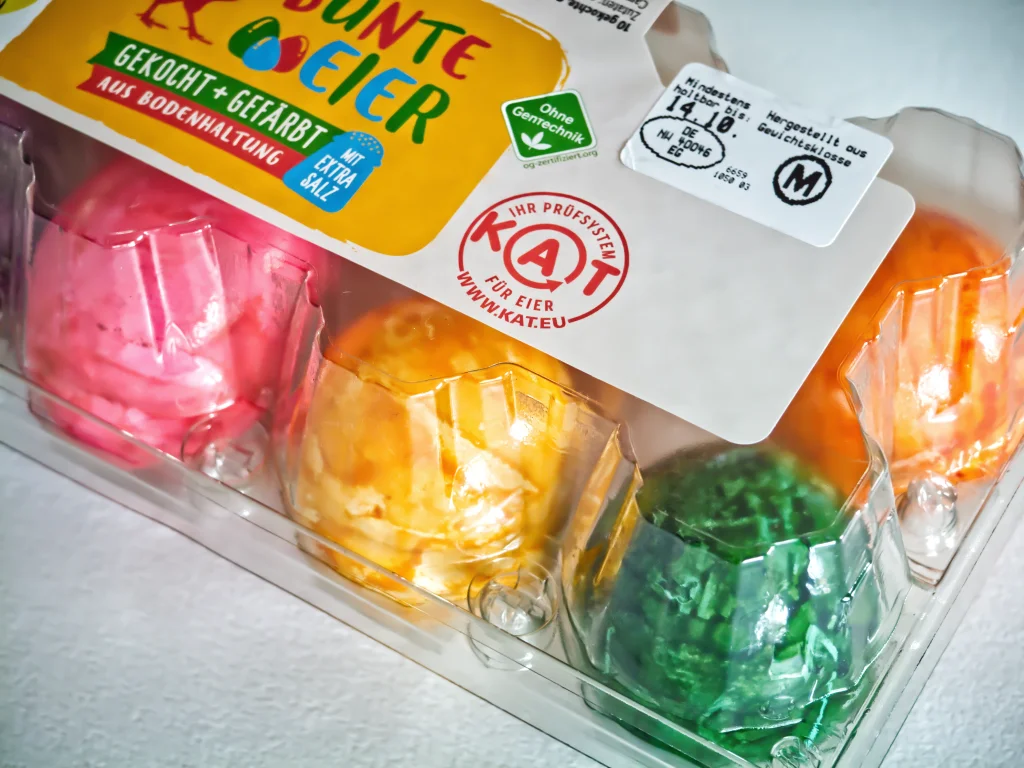
Consumer-Facing Transparency: Within the KAT system, eggs are traceable along the supply chain. Each egg carries a legally required producer code (e.g., “DE-0-1234561”), which identifies the origin of the egg. KAT enables the tracing of this code within its system, allowing consumers and partners to access information about the egg’s origin and production conditions via dedicated traceability services.
This transparency system provides information for the specific farm origin, the chicken breed that laid the egg, the type of housing system (organic farm, spacious cage, small cage, free-range), and comprehensive information about the farmer and their operation. This identification system enables buyers to make informed purchasing decisions based on animal welfare considerations.
KAT e.V guidelines and data collection create high data density that serves as a deliberate purpose in making it difficult for chicken companies and egg companies to circumvent regulations or mistreat chickens. Such high data density increases the cost and complexity of falsification - a regulatory mechanism embedded in data architecture itself to serve an enforcement function.
Client's Pain Point
2 major problems were presented:
Regulatory burden from the perspective of chicken farmers
Systemic tech inefficiency
From the perspective of chicken farmers, KAT e.V was perceived as a "roadblock" because their physical paper data sheets were exhaustive, time consuming and kept farmers from their actual work. This is not an accidental misunderstanding but inherent to their regulatory function. Compliance demands extensive paperwork and documentation. Therefore, mandatory compliance measures that farmers must provide to demonstrate adherence.
The critical insight, however, is that this perception stems not from the regulations themselves but from the data collection methods - classic printed paper sheets with densely designed tables where farmers record chicken health ratings and flock evaluations across multiple forms. These must be physically completed, scanned, and transmitted. Hence, the perception problem was fundamentally a user experience problem.
Secondly, systemic tech inefficiency plagued operations. KAT legacy database had grown organically over time, becoming unmaintainable and extraordinarily cumbersome.
The interface proved difficult to use because features got added incrementally without architectural revision until the whole structure became incoherent.
Features not designed from the initial design workflows led to usability issues that no amount of incremental improvement could resolve without fundamental redesign.
For KAT e.V, their target audience - chicken farmers - is particular.
Here is a demographic often characterized by limited digital literacy and challenging working conditions. While these users may not be tech savvy and might not be very comfortable using digital devices as their professional focus centres on farming operations rather than technology, they operate in hen house environments, often wearing gloves, working in variable lighting conditions, physically surrounded by chickens during the evaluation process itself.
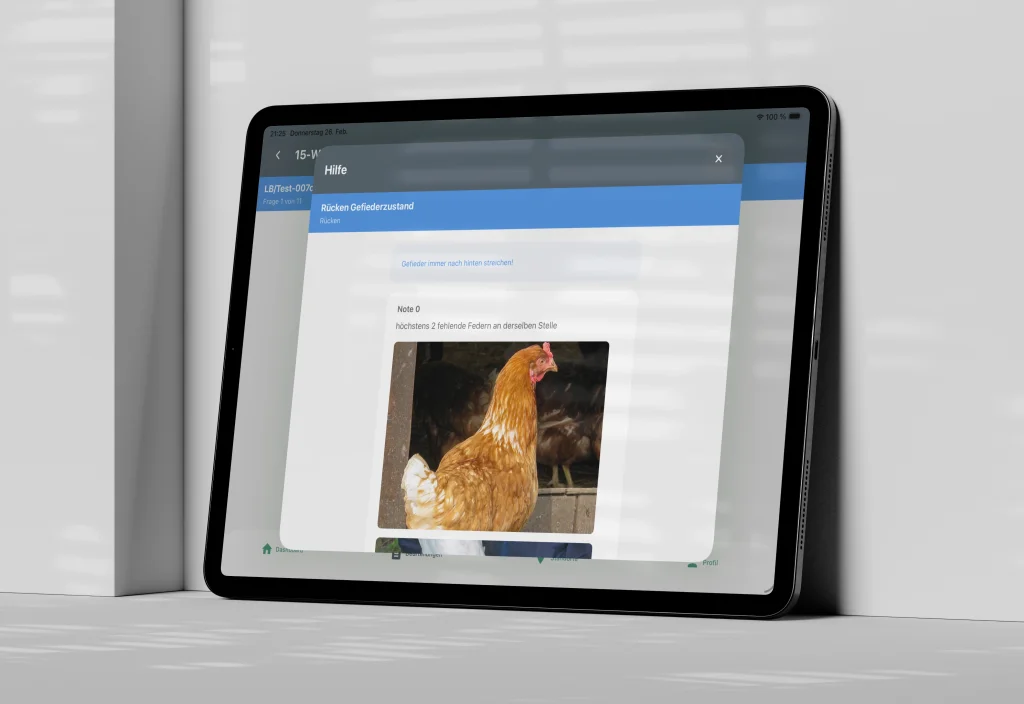
During evaluations, farmers must physically handle each chicken by lifting, rotating, and closely inspecting for signs of health, damage, or injuries with an in-app camera integration, whilst simultaneously documenting their findings.
Building on this, KAT e.V digitalization initiative addresses both operational efficiency and institutional legitimacy, hence reducing compliance friction whilst maintaining data quality and regulatory rigour. The KAT-TOOL app serves as the technical solution to this institutional challenge.
How does the solution work?
KAT TOOL core architectural structure is an offline-capable solution that directly responds to the operational reality of barn environments.
Most hen houses lack reliable internet connectivity or Wi-Fi, being "shielded environments by nature" often in remote locations. Importantly, this is not merely a technical limitation to be worked around but an inherent characteristic of agricultural infrastructure that cannot realistically be changed.
The offline-capable solution solves this fundamental constraint by inverting the typical connectivity model employed by most modern applications. Rather than requiring constant connection to function, the application requires connection only at 2 specific moments:
During initial authentication;
Synchronizing collected data back to the central system: connects to KAT backend infrastructure.
Practical Implementation
When farmers authenticate, all their locations, hen houses, and flocks download to the device in a single operation. For farmers managing multiple hen houses across different locations, this comprehensive synchronization means farmers can operate entirely offline across all operations without needing to request additional data or authenticate multiple times.
The data structure follows a hierarchical organization:
User data organized under KAT Account → Locations → Hen Houses → Flocks.
This initial synchronization requires an internet connection which establishes the baseline for all subsequent offline operations.
Once this initial setup completes, chicken farmers can then log in when online, complete all field operations offline, and then synchronize collected evaluation data when online again, to our backend which connects via API to the KAT database.
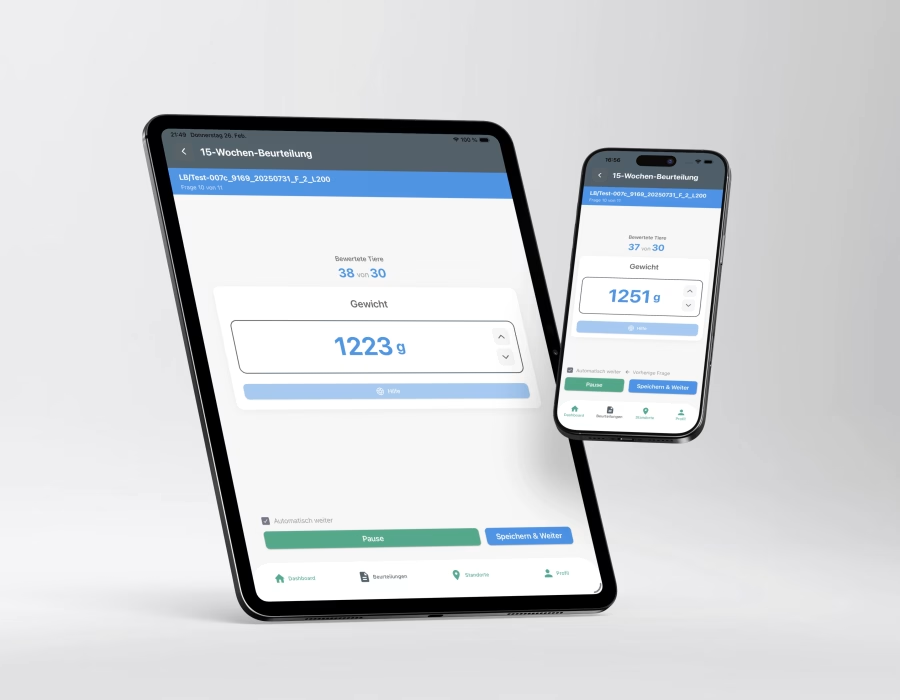
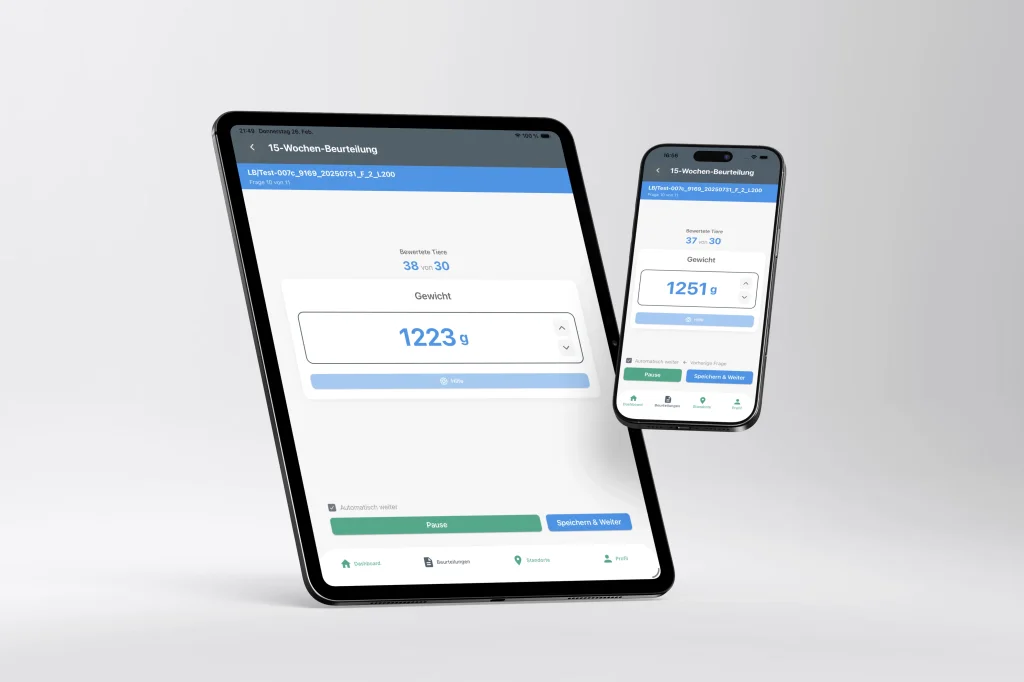
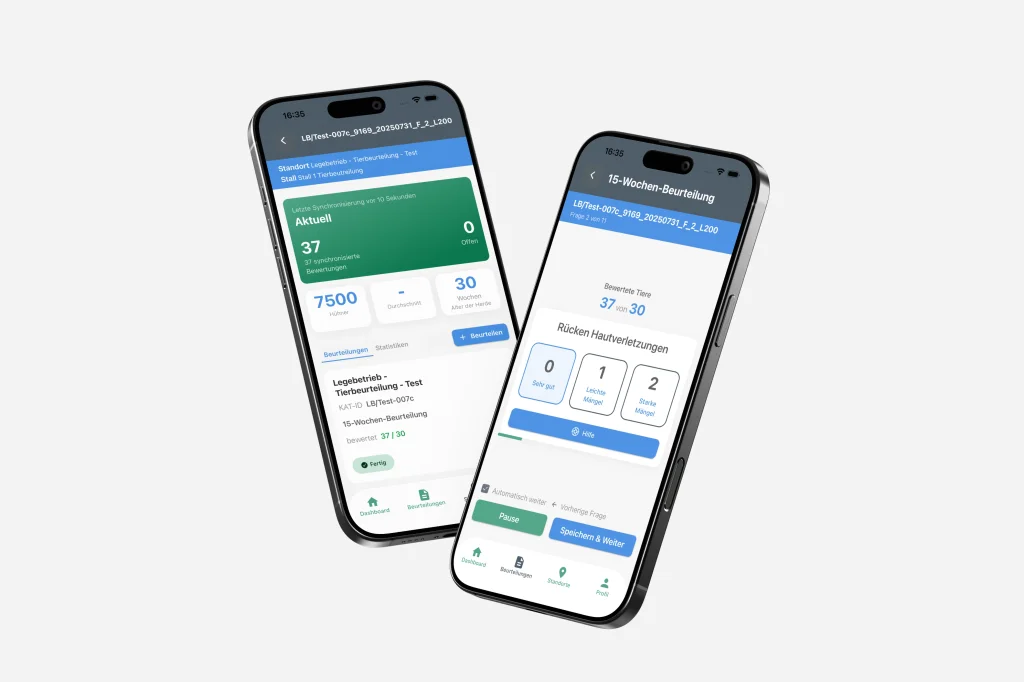
With offline capability established, the evaluation process is more efficient. The digitized workflows now enable farmers to speed the physical handling of chickens during evaluations. That is, by handling each chicken, farmers must document their assessment by answering 8 evaluative questions and recording 1 weight measurement, hence, creating 9 data points per chicken.
8
Evaluative Questions
1
Weight Input
9
Data Points / chicken
This process repeats 30 times per standard evaluation, meaning farmers must handle 30 chickens and record 270 data points during each mandatory evaluation cycle.
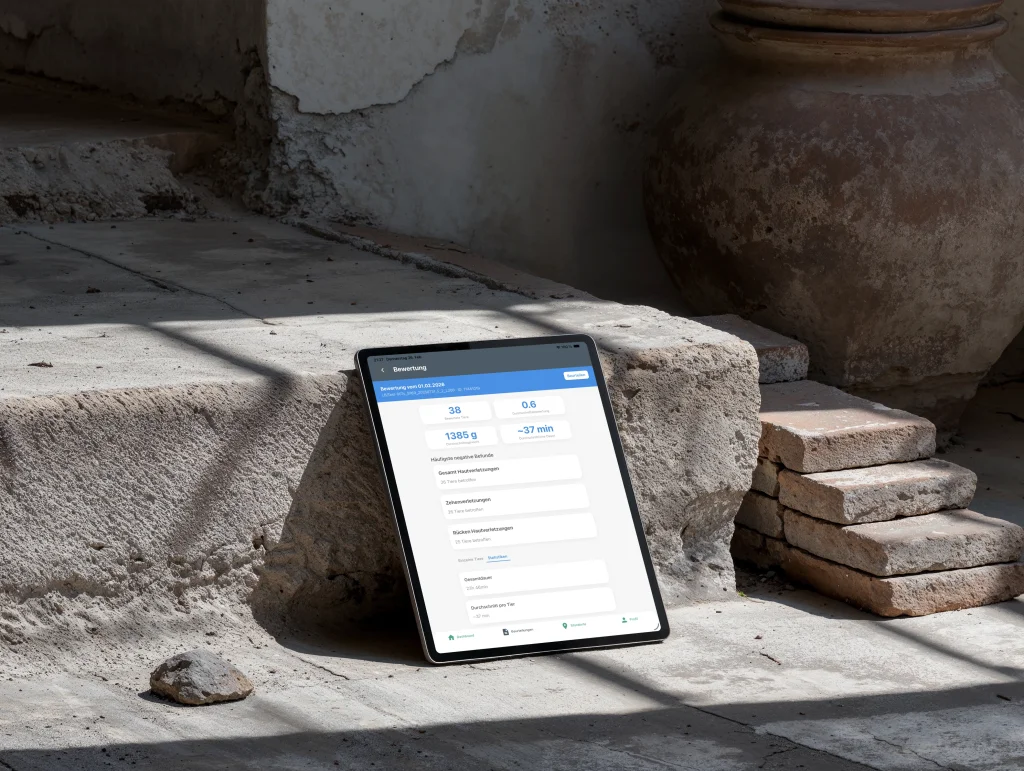
This digitized process becomes particularly valuable when considering the 15-week evaluation cycle mandated by regulations. The predictable scheduling creates foreseeable compliance requirements that KAT-TOOL can calculate and display in advance. The dashboard displays upcoming evaluations across all locations, automatically showing immediate priorities based on the mandatory cycle.
This capability shifts compliance from the previously manual tracking burden, where farmers must remember which flocks require evaluation when, to an automated scheduling system that indicates the next actions (pending, complete, due evaluations).
More so, given the variability of the farmers’ working condition, the user interface is a deliberate baseline design requirement that prioritizes the farmer’s work itself over distracting features. The farmer's attention remains focused on the chicken being evaluated, not on navigating a complex interface.
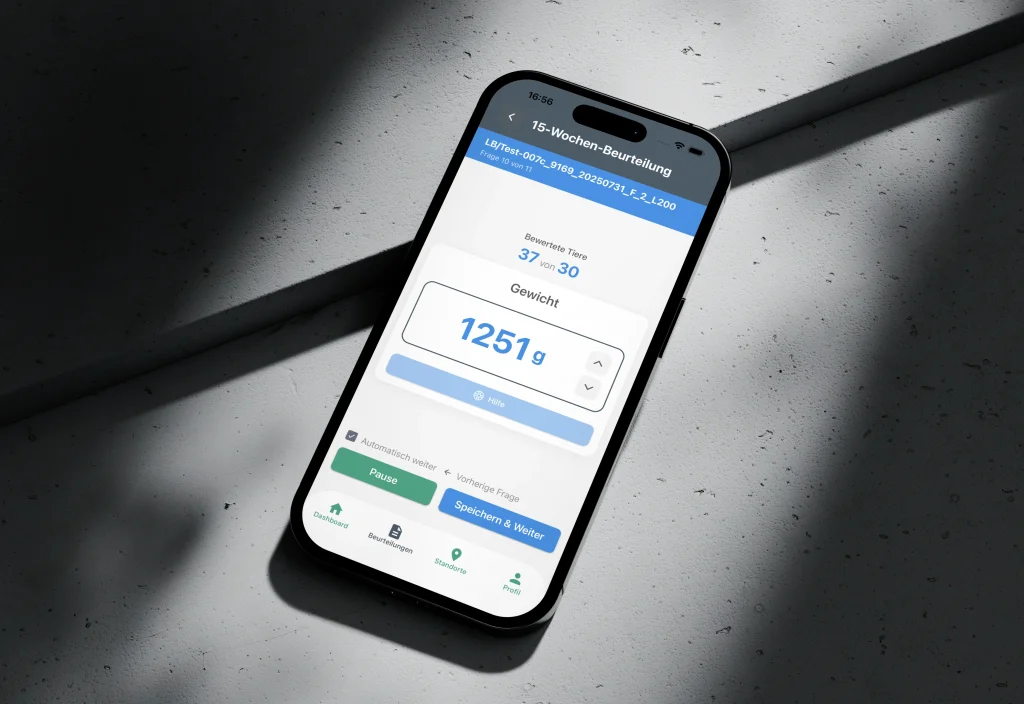
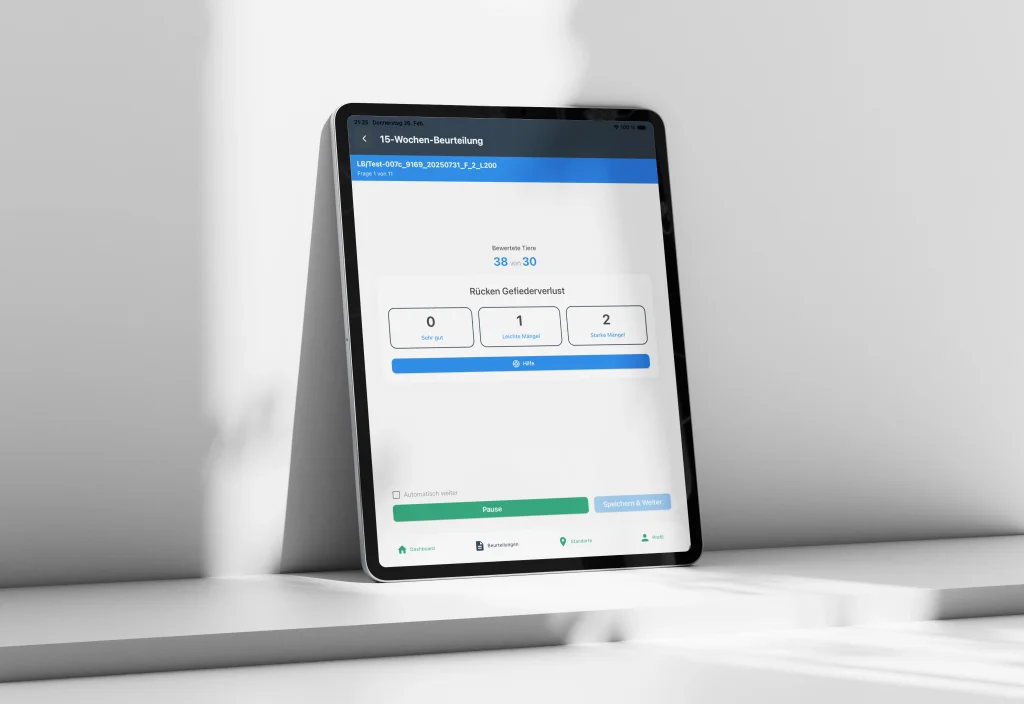
The KAT-TOOL app interface is designed to directly accommodate the physically demanding context of work conditions through several carefully considered features. Large, easily tappable buttons remain usable while wearing gloves; an essential consideration given that farmers cannot remove protective equipment during the evaluation process.
0
Very Good
1
Minor Defects
2
Major Defects
The simple 0-1-2 rating system (where 0 represents best condition and 2 represents worst condition) requires minimal cognitive load, presenting only 3 clear options per question.
Furthermore, the complete absence of hidden menus or unlabelled iconography, combined with applying translations into the app aims at maximum accessibility for everybody. This explicit labelling ensures that everyone can use the label to understand what happens when a button icon is tapped or navigates to a different screen.
The resulting interface is clean, user-friendly, not a fancy design, but rather simple, robust, and solid. Critically, it works consistently across every device: iPad, iPhone, and Android phones, ensuring that farmers can use whatever hardware they already possess.
Beyond this custom interface, the KAT-TOOL uses Bluetooth scale integration to bridge data synchronization. The Bluetooth integration merits particular analysis as an example of pragmatic feature scoping within real-world constraints. The Bluetooth connectivity transmits weight readings in a constant data stream. By using the specific industry scale, it connects to the user’s phone and generates accurate readings. Integrating this compatible scale eliminates manual weight entry: 1 of the 9 required data points per chicken evaluation by also reducing transcription errors and speeding the evaluation process.
How was the solution developed?
With user requirements established, the team developed a 3-tier architecture addressing both modern functionality and legacy system constraints:
The client application (mobile app for iOS and Android) that stores data locally when offline;
A custom middleware backend built with Laravel that converts data between formats;
The legacy KAT database system serving as a permanent data repository
The critical architectural decision involved the middleware layer - bridging modern and legacy systems. Rather than directly connecting the mobile application to the legacy database which would tightly couple new development to old constraints or undertaking massive database migration, which would be expensive, risky, and highly disruptive, the team built a "man in the middle" transformation layer that sits between the two systems.
This middleware strategy delivers several interconnected advantages:
It provides risk mitigation by ensuring no disruption to existing KAT database operations, which continue serving other critical functions during and after mobile app deployment.
It creates a gradual migration path where future systems can connect through the same middleware without requiring another complete system replacement.
It enables format translation where the modern application uses contemporary data structures whilst the legacy system maintains its existing format, eliminating the need to modify either system to accommodate the other.
It achieves separation of concerns whereby mobile app development proceeds independently of legacy system constraints, accelerating development whilst reducing risk.
The middleware architecture treats the legacy database as an external system requiring API access only. This abstraction layer represents sophisticated systems logic in recognizing technical debt. Despite the legacy database system’s substantial limitations, it remains a KAT e.V operational data repository. Rather than replacing it, expensive, risky, and disruptive, the middleware extends its capabilities without insulating the mobile application from its constraints.
The Laravel backend “can transform the data into the old format and vice versa” by implementing bidirectional translation that enables modern application architecture in preserving legacy system compatibility.
This translation layer serves as what software architects call an “anti-corruption layer,” preventing legacy system constraints from corrupting modern system design. Future improvements to either system can proceed independently, with the middleware handling any translation requirements that emerge.
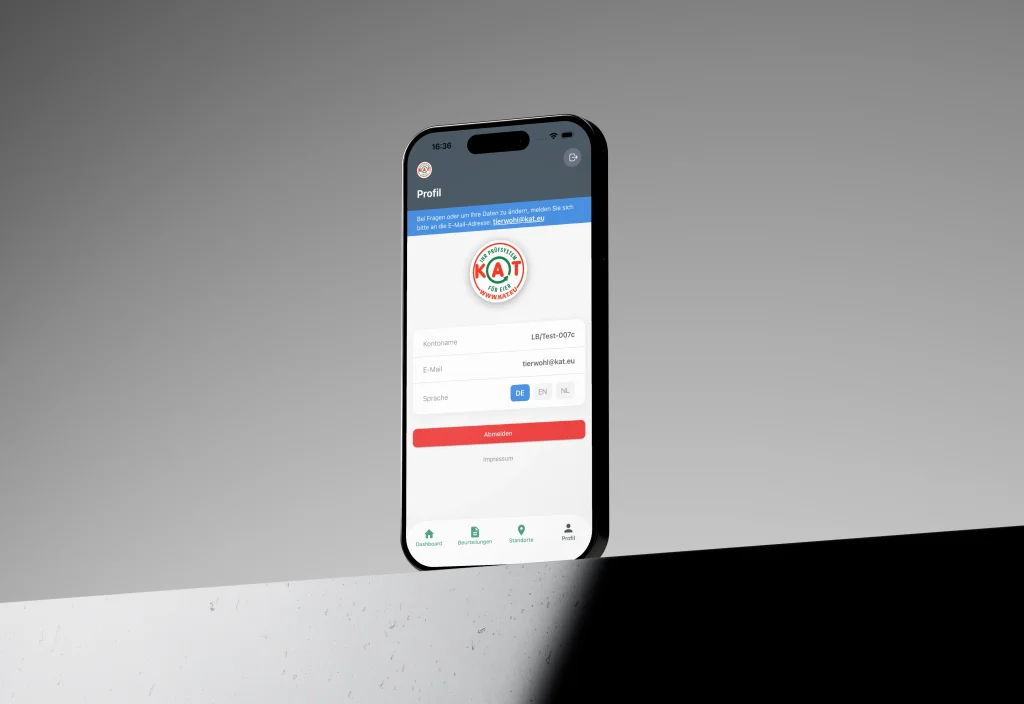
Building on this architectural foundation, the authentication design reveals further security and user experience considerations. Users log in with existing KAT database credentials and not new credentials created specifically for the mobile application. The middleware receives these credentials and passes them through to the KAT database for verification, implementing what security professionals call “pass-through authentication.”
This design decision eliminates several potential problems that alternative approaches would create.
It removes the need for a separate credential management system, which would add complexity and potential security vulnerabilities.
It prevents user confusion about which credentials to use: farmers use the same credentials they already know for the existing KAT system.
It leverages existing security infrastructure rather than duplicating it, reducing attack surface area.
Perhaps most importantly, it maintains a single source of truth for authentication, ensuring that account changes, password resets, and access revocations happen in one place and automatically flow through to all systems.
Consequently, the backend allows the user -farmer- direct interaction with their familiar KAT e.V system, lifting the technical complexity of the new intermediary layer.
Development challenges
TinyBase Implementation
Bluetooth Integration
TinyBase Implementation
The team selected TinyBase explicitly in its novelty to the development team and specifically chose to run it with a custom backend rather than TinyBase's provided backend. This decision required substantial customization and dialing in to make it work perfectly for our use case, as a deliberate acceptance of learning curve and customization costs in exchange for specific capabilities.
The strategic logic for TinyBase offered specific advantages for offline-first, data-heavy applications, including local storage and IndexedDB for web development, SQLite for native devices, and automatic configuration management that handles complexity of cross-platform deployment between these storage mechanisms transparently.
However, adopting new technology necessarily introduces risks. TinyBase gave the development team the advantage that locally we can develop on a web-based interface with very good developer experience. The technology choice prioritized long-term development velocity over short-term familiarity, accepting upfront learning costs for sustained downstream benefits.
Bluetooth Integration
The implementation faced both technical and commercial constraints. The industry-standard chicken scale offered limited public documentation available for integration. Nevertheless, communication with the manufacturer proved resourceful with more information on the manufacturer’s intended use and Bluetooth design.
However, the technical capability to integrate proved insufficient for complete deployment. The scale uses serial Bluetooth, which on iOS requires joining Apple's MFI (Made for iPhone) programme for certified Bluetooth devices.
The scale uses serial Bluetooth, which on iOS requires joining Apple's MFI (Made for iPhone) programme for certified Bluetooth devices.
The MFI programme functions as Apple's mechanism for ensuring quality and security of accessories, but participation requires resources and commitments that not all organizations can or will make. Neither KAT e.V nor the scale manufacturer opted to join this programme, which involves certification fees, compliance requirements, and ongoing obligations that represent commercial decisions beyond purely technical implementation considerations.
Rather than either forcing programme participation or abandoning the feature entirely, the development team implemented the Bluetooth exclusively on Android to enhance user experience substantially. At runtime, the build process checks the operating system and conditionally integrates Bluetooth accordingly.
The fact the scale integration currently accommodates Android does not diminish iOS core functionality.
The app remains fully operational on both platforms. However, unlike Android users who can receive synchronized weight readings using the compatible scale, iOS users must input weight measurements manually.
Legacy System Integration
KAT e.V existing legacy database has accumulated technical debt typical of long-running systems. The system became unmaintainable and extraordinarily cumbersome falling behind periodic architectural revision.
For this case, the development team avoided two high-risk strategies that seemed intuitive: direct database modification or complete database migration. Direct modification by changing the legacy database structure to better accommodate mobile application needs would risk disrupting the KAT e.V operational system upon which existing workflows and other systems depend.
Complete migration to a new database designed for modern requirements would have been expensive, carrying significant risk of data loss or corruption, and cause major disruption to ongoing operations during transition.
Is This A Bespoke Solution ?
This solution qualifies as bespoke software. It is custom-built for specific requirements rather than configured from commercial off-the-shelf software.
Upon assessment, the solution demonstrates bespoke characteristics across multiple dimensions, each responding to unique aspects of KAT e.V operational context.
Custom business logic - an 8-question evaluation system with 0-1-2 rating scale, 15-week evaluation cycles, and 30-chicken standard evaluation, represents KAT e.V-specific regulatory requirements that no commercial software product addresses.
Legacy system integration features middleware specifically architected for KAT database structure and API, solves an integration problem unique to this organization.
Industry-specific features including Bluetooth integration with specialized chicken scales address agricultural equipment not considered by general-purpose software.
Environmental constraints addressed through offline capability respond to barn connectivity limitations specific to agricultural infrastructure.
User experience design interface specifically crafted for non tech savvy users working in challenging physical conditions addresses specific user context.
Hierarchical data structure organized as: Account → Locations → Hen Houses → Flocks, is KAT e.V specific operational model rather than generic organizational patterns.
The solution could not be purchased as commercial off-the-shelf software precisely because it addresses KAT e.V unique combination of regulatory requirements, legacy system constraints, user context, and operational needs. While individual features might exist in various commercial products, no single product combines all these capabilities configured appropriately for this specific context.
This represents the essence of bespoke software: solutions tailored to specific organizational requirements that cannot be adequately served by configuring generic products.
Offline-First Operation
Simplified Interface
Cross-Platform Deployment
Bluetooth Scale Integration (Android)
Comprehensive Data Synchronisation
Photographic Documentation
Multi-Language Support
Labelling Design
Colour-code Indicators
Middleware Data Deployment
Let's have a call
Are You Struggling With Legacy Systems?
Different testing environments: development, staging, and live testing
Quality assurance
Collaborative iteration cycles, wireframes
Discuss budget realities: fixed scope vs flexible scope projects
Some cookies are essential for the functioning of this site and cannot be deactivated. We also use cookies to analyse the performance and use of our website and to promote our marketing activities. You can find more information in our Privacy Policy. You can change your settings by clicking on "Settings".